
CELEBRITY
Bruce Willis family has already made peace with the hardest decision after his passing. His brain will be donated to science, in the hope of advancing research on the disease that slowly took him from them

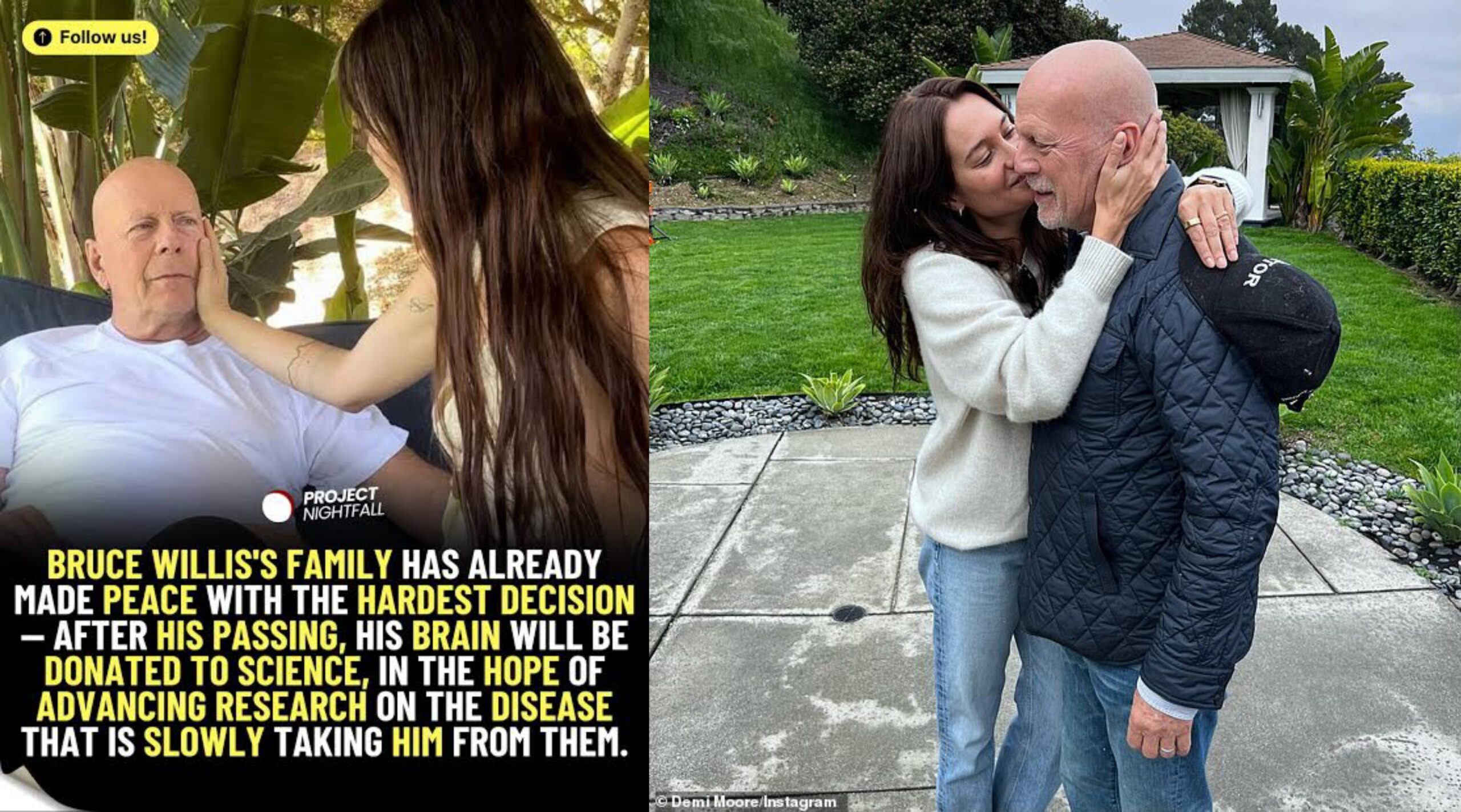
For a family already navigating one of life’s most painful journeys, thinking about a future without someone they love is an emotional burden few can truly understand. And for the family of legendary Hollywood actor Bruce Willis, the battle against frontotemporal dementia has brought difficult conversations about the future, medical research and the possibility of turning personal tragedy into hope for countless other families.
The beloved Die Hard star, who stepped away from acting after being diagnosed with aphasia in 2022, was subsequently diagnosed with frontotemporal dementia (FTD) in February 2023. Since then, his family has remained devoted to supporting him through a progressive neurological condition that has increasingly affected his ability to communicate and interact with the world around him.
Reports surrounding the family’s intentions after his eventual passing have drawn renewed attention to the possibility of donating his brain to scientific research. The reported intention is rooted in a desire to help researchers better understand the devastating condition that has profoundly changed the actor’s life and the lives of those closest to him.
Although the subject of brain donation is understandably difficult for any family to confront, it can provide scientists with invaluable opportunities to investigate neurological diseases. By examining donated brain tissue, researchers can study changes in brain structure, abnormal protein accumulation and other biological features associated with conditions such as FTD.
For the Willis family, the broader motivation behind supporting research is particularly meaningful. Their experience has exposed them to the emotional, physical and practical challenges faced by families caring for loved ones with dementia.
Bruce’s wife, Emma Heming Willis, has become an outspoken advocate for dementia awareness and caregiver support. Through interviews and her book, The Unexpected Journey, she has shared the painful realities of navigating her husband’s diagnosis while raising their two young daughters.
His former wife, Demi Moore, and their three daughters, Rumer, Scout and Tallulah, have also remained part of the supportive family circle surrounding the actor.
Frontotemporal dementia is particularly devastating because it affects areas of the brain responsible for personality, behaviour, language and decision-making. Unlike some other forms of dementia, its symptoms can initially appear as changes in personality, communication difficulties or unusual behavioural patterns.
There is currently no cure for FTD, making scientific research and greater public awareness especially important.
Beyond his extraordinary Hollywood career, Willis has become a symbol of the human reality behind neurological diseases. Millions of people who once celebrated his performances as an unstoppable action hero are now following his family’s journey with compassion.
For his loved ones, the priority remains ensuring that Bruce receives love, dignity and the best possible care while he is still here.
And should his family eventually proceed with brain donation, the hope would be that something meaningful could emerge from an otherwise heartbreaking experience.
It would be a contribution extending beyond Hollywood, potentially helping scientists understand a disease that continues to affect thousands of families around the world.

Will Smith reportedly reached out to Michèle Lamy to stay away from his son jaden before he takes legal actions against her stating that she’s way older and so much influential than him.

JASON MOMOA & EMILIA CLARKE REUNITE, AND WE’RE ALL BACK IN LOVE WITH KHAL DROGO AND HIS KHALEESI! 😭❤️🔥

Jaden Smith admits that ever since he has been with 82-year-old Michèle Lamy things has changed so much about him, as he reveals he’s already falling in love with her. The two were spotted together once again, taking a romantic vacation on a private yacht in Paris…..

Kai Trump sparks dating rumors with a Miami football star after the pair were spotted having dinner together in Palm Beach. 👀🔥

Jaden Smith admits that just one night with 82-year-old Michèle Lamy changed so much about him, as he reveals he’s already falling in love with her. The two were spotted together once again, taking a romantic walk in Paris.

Karim Benzema was recently spotted with his alleged new boyfriend, and the two were rocking matching outfits! 👀 But wait a minute… is that baby oil or water-based lubricant in the picture?

Pedro Pascal was CAUGHT ON CAMERA KISSING his 29 year old friend on a yacht in Spain. They look happy and seem to be doing well.

BREAKING: Donald Trump has lost his mind as his press conference descends into chaos while he attacks CNN news anchor Kaitlan Collins. After a short minute break, his microphone is accidentally left on, shockingly capturing this and causing massive reactions calling for why Trump is still President

BABY NO. 4 IS ON THE WAY! Chiefs QB Patrick Mahomes & Brittany SHOCK the NFL World With Stunning Pregnancy Announcement as They Reveal Ultrasound Photos to show the tiny heartbeat and gender reveal

Meghan Markle Hugs Mom Whose Son Died by Suicide During Emotional Moment of Brussels Visit

Drake booked a two day private romantic getaway in Turks and Caicos with his ex-girlfriend Jennifer Lopez. They just might be back together. 👀❤️
